Flow State: The Science Behind Getting in the Zone
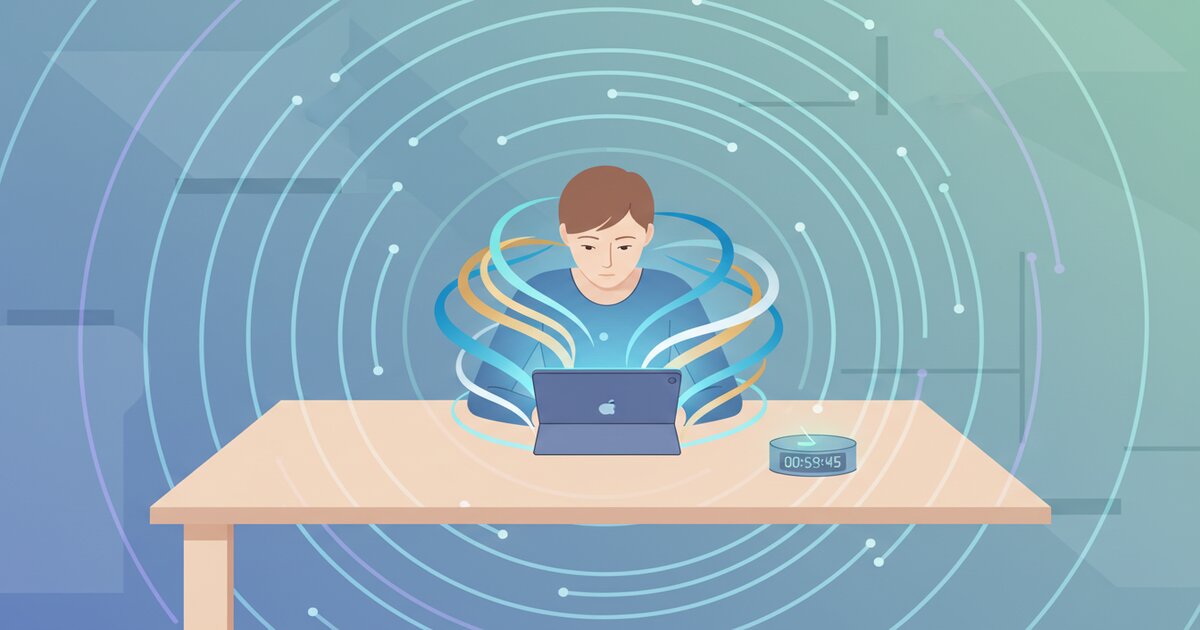
You have probably experienced it before, even if you did not know the name. You sit down to work on something, and before you realize it, two hours have passed. Your focus was sharp, distractions faded into nothing, and the work just flowed out of you. That sensation - where everything clicks and time seems to bend - is called flow state. And understanding how it works can change the way you approach your most important work.
Flow state is not some mystical experience reserved for elite athletes or concert pianists. It is a well-studied psychological phenomenon that anyone can learn to access more consistently. The science behind it explains why some of your best work happens during those rare stretches of total absorption, and more importantly, it reveals what you can do to make those stretches happen more often.
What Is Flow State?
The concept was first described by psychologist Mihaly Csikszentmihalyi in the 1970s after decades of studying what makes people genuinely happy and engaged. He interviewed thousands of people - rock climbers, chess players, surgeons, factory workers, artists - and found a common thread. Across cultures, professions, and backgrounds, people described their most satisfying moments in remarkably similar terms: complete absorption in a task, a merging of action and awareness, and a sense that time had either slowed down or sped up.
Csikszentmihalyi called this experience "flow" because so many of his subjects described the feeling as being carried along by a current, like water flowing in a river. You are not fighting to focus. You are not forcing yourself to stay on task. The work just moves through you.
Neurologically, flow involves changes in brain activity that you cannot fake with caffeine or willpower alone. During flow, the prefrontal cortex - the part of your brain responsible for self-monitoring, doubt, and inner criticism - temporarily quiets down. Researchers call this "transient hypofrontality." Your inner critic goes on break. Without that constant internal chatter second-guessing every decision, information processing speeds up, pattern recognition improves, and creative connections form more easily.
At the same time, your brain releases a cocktail of neurochemicals - dopamine, norepinephrine, endorphins, anandamide, and serotonin. These chemicals sharpen your focus, increase your motivation, boost creativity, and make the experience genuinely pleasurable. This is why flow feels so good. Your brain is literally rewarding you for sustained, deep engagement with a challenging task.
The Conditions That Trigger Flow
Flow does not happen randomly. Research has identified several conditions that make it far more likely. You do not need all of them present at once, but the more boxes you check, the easier it becomes to slip into that focused state.
The Challenge-Skill Balance
This is the single most important factor. Flow happens when the difficulty of what you are doing matches your current skill level - but only in a specific sweet spot. The task needs to be hard enough to fully engage your attention, but not so hard that you feel anxious or overwhelmed.
If a task is too easy, you get bored. Your mind starts to wander. You check your phone, open a new browser tab, or start thinking about lunch. If a task is too difficult, you feel frustrated, stressed, and stuck. Neither state leads to flow.
The sweet spot sits right at the edge of your abilities - what some researchers call the "challenge-skill boundary." You know enough to make progress, but the task demands your full attention. A programmer debugging a tricky problem. A writer wrestling with a paragraph that is almost right but not quite. A designer iterating on a layout that needs to communicate something specific. These are the moments where flow lives.
Clear Goals
Flow requires knowing what you are trying to accomplish moment to moment. This does not mean you need a detailed project plan. It means you need clarity about the immediate next step. "Write the introduction to this article" is clearer than "work on the blog." "Fix the login bug on the signup form" is clearer than "do some coding."
When your goals are vague, your brain spends energy figuring out what to do rather than actually doing it. That decision-making overhead prevents the kind of automatic, absorbed engagement that flow requires.
Immediate Feedback
You need to know whether what you are doing is working. A musician hears the notes as they play them. A writer sees the words forming on the screen. A rock climber feels whether their grip is solid. This feedback loop keeps you engaged because you can constantly adjust, correct, and improve in real time.
Tasks that provide no feedback make flow almost impossible. If you write a report and will not hear back for two weeks, the lack of immediate response makes it harder to stay absorbed. But if you are running experiments and seeing results in real time, or writing code and watching tests pass or fail, the tight feedback loop pulls you deeper into the work.
Elimination of Distractions
Flow requires unbroken attention. Research suggests it takes 15 to 25 minutes of sustained focus before flow begins, and a single interruption can snap you right out of it. A coworker tapping your shoulder, a push notification, even a quick glance at your email - any of these can reset the clock and force you to start the ramp-up process all over again.
This is why protecting your environment matters so much. Flow cannot coexist with constant interruptions. You need to create conditions where your attention can build momentum without being broken.
How to Reach Flow State: Practical Steps
Knowing the theory is useful, but the real question is: how do you actually get there? Here are concrete strategies that work, based on what researchers and high performers consistently recommend.
- Choose one task and commit to it. Multitasking is the enemy of flow. Monotasking - giving your full attention to a single task - is a prerequisite for flow. Pick the single most important thing you need to work on and make it the only thing that exists for the next 60 to 90 minutes. Close every tab, app, and tool you do not need for that specific task.
- Define your immediate objective. Before you start, get crystal clear about what you are trying to produce in this session. Not "work on the project" but "draft sections 2 and 3 of the report" or "build the user settings page." Specificity gives your brain a target to lock onto.
- Match difficulty to your skill level. If the task feels too easy, add a constraint - a tighter deadline, a higher quality bar, or a more ambitious scope. If it feels overwhelming, break it into a smaller piece that you can actually tackle right now. You are looking for that sweet spot where the work requires your full attention without crushing you.
- Eliminate all distractions before you begin. Put your phone in another room. Close your email client. Turn off Slack and Teams notifications. If you work in a noisy environment, use noise-cancelling headphones with ambient sound or focus music. The preparation happens before the work starts, not during.
- Use a timer to create structure. Setting a timer creates a container for your focus. The Pomodoro Technique uses 25-minute focused intervals, which works well for building up to flow. As you get more practiced, you can extend sessions to 50 or 90 minutes. Try Productivity Timer to keep your sessions structured.
- Start with something easy. If you are struggling to begin, lower the bar for the first five minutes. Tell yourself you just need to write one paragraph, sketch one layout, or solve one small problem. Starting is often the hardest part, and once you are moving, momentum builds naturally.
- Build a pre-work ritual. Your brain responds to cues. If you always make a cup of tea, put on the same playlist, and sit in the same chair before focused work, your brain starts associating those cues with deep concentration. Over time, the ritual itself becomes a trigger that helps you shift into focus mode faster.
Why Flow Matters for Productivity
Flow is not just about feeling good while you work. It has measurable effects on your output, your creativity, and your skill development.
McKinsey conducted a 10-year study on flow in the workplace and found that executives reported being up to five times more productive during flow states. That is not a marginal improvement. It means an hour of focused, flow-level work can produce what might take an entire morning of fragmented effort.
But the benefits go beyond raw output:
- Accelerated learning. When you are in flow, your brain encodes information more efficiently. Skills that might take months to develop through scattered practice can be acquired much faster when you regularly enter flow during practice sessions.
- Enhanced creativity. The quieting of your inner critic during flow allows your brain to make unusual connections and explore ideas without self-censorship. Many of the best creative insights happen during or immediately after flow states.
- Greater satisfaction. Csikszentmihalyi's research found that people who experience flow regularly report higher levels of life satisfaction, regardless of their income, job title, or external circumstances. The experience of being fully engaged in meaningful work is deeply fulfilling in itself.
- Reduced burnout. This sounds counterintuitive, but flow actually protects against burnout. When you are in flow, the work energizes you rather than draining you. People who spend more time in flow tend to feel less exhausted at the end of the day, even though they produced more.
Common Barriers to Flow (and How to Overcome Them)
If flow is so valuable, why do most people experience it so rarely at work? Usually, it comes down to a few predictable obstacles.
Constant Interruptions
Open offices, Slack channels, meetings scattered throughout the day - modern work environments are almost perfectly designed to prevent flow. The average knowledge worker is interrupted every 3 to 5 minutes, and it takes about 23 minutes to fully regain focus after an interruption.
The fix: block off chunks of uninterrupted time on your calendar. Communicate to your team that during these blocks, you are unavailable unless something is genuinely urgent. Time blocking your schedule creates the space flow needs to develop.
Unclear Priorities
When you sit down to work and do not know what matters most, your brain cycles through options instead of committing to one thing. This indecision creates low-level anxiety that prevents you from settling into deep focus.
The fix: decide what you will work on before you start your focused session. Spend five minutes at the end of each day planning tomorrow's priorities. When you sit down the next morning, the decision is already made.
Self-Doubt and Perfectionism
Your inner critic can prevent flow before it starts. If you are constantly questioning whether your work is good enough, whether you are approaching the problem the right way, or whether others will judge your output, that self-monitoring keeps your prefrontal cortex active - exactly the opposite of what flow requires.
The fix: give yourself permission to produce a rough first draft. Tell yourself that quality comes in revision, not in the initial creation. Separating the creative phase from the editing phase allows you to enter flow during creation without the weight of perfectionism.
Physical State
Being tired, hungry, dehydrated, or physically uncomfortable makes flow nearly impossible. Your body sends constant signals that compete for your attention, preventing the kind of total absorption flow requires.
The fix: treat your physical state as a prerequisite for focus. Sleep enough, eat before your focus sessions, stay hydrated, and make sure your workspace is comfortable. These basics are easy to overlook, but they have an outsized impact on your ability to reach flow. Managing your energy levels throughout the day is just as important as managing your time.
Flow and the Pomodoro Technique
At first glance, the Pomodoro Technique and flow might seem like they are at odds. The Pomodoro method breaks work into 25-minute intervals with forced breaks, while flow thrives on uninterrupted stretches. So how do they work together?
The answer is that the Pomodoro Technique is one of the best training tools for developing the focus capacity that flow requires. Here is why:
- Pomodoros build your focus muscle. If you cannot sustain attention for 25 minutes, you are unlikely to reach flow during longer sessions. The Pomodoro method trains your brain to maintain concentration for defined periods, gradually building the stamina needed for extended flow.
- The timer creates urgency. Knowing you have 25 minutes creates a productive constraint that often pushes you past the initial resistance phase and into deeper engagement. Many people find that by the third or fourth Pomodoro of a session, they start slipping into flow naturally.
- Breaks prevent diminishing returns. Even during a flow state, cognitive resources deplete over time. Stepping away for five minutes between intense focus periods helps maintain quality across a longer work session. The key is to take breaks that restore rather than distract - a walk, some stretching, or just sitting quietly.
- Structure reduces decision fatigue. When your work session is structured (25 on, 5 off, repeat), you do not waste mental energy deciding when to work and when to rest. That freed-up cognitive space makes it easier to immerse yourself in the actual work.
As you get more comfortable with focused work, you can adapt the technique. Some people extend their Pomodoros to 50 or even 90 minutes when they feel flow building. The point is not rigid adherence to 25 minutes - it is using structure to create the conditions where flow becomes possible.
Building a Daily Flow Practice
Flow is not something you stumble into by accident. The people who experience it most often have built deliberate practices around it. Here is a simple framework for making flow a regular part of your work life:
- Identify your peak hours. Most people have 2 to 4 hours in the day when their cognitive energy is highest. For many, this is the morning. Pay attention to when you naturally feel most alert and focused, and reserve those hours for your most challenging, flow-worthy work.
- Protect those hours ruthlessly. Do not schedule meetings during your peak hours. Do not check email. Do not let shallow tasks creep in. These are sacred hours for deep, focused work, and they are where most of your valuable output will come from.
- Warm up with a low-stakes task. Spend the first 5 to 10 minutes on something related but easy - reviewing yesterday's work, organizing your materials, or outlining what you will do. This eases your brain into focus mode without the pressure of immediately performing at a high level.
- Track your flow sessions. Keep a simple log of when you entered flow, what you were working on, and how long it lasted. Over time, you will spot patterns about which tasks, times, and environments produce flow most reliably for you. Use the Focus Session Log to track your sessions and build a streak, or try a tracking sheet for a paper-based approach.
- Review and adjust weekly. At the end of each week, look at your flow log. Did you hit flow every day? What got in the way on the days you did not? What can you change next week to create more opportunities? Small adjustments compound over time into dramatically better focus habits.
Flow Beyond Work
While this article focuses on flow in the context of productivity and work, it is worth noting that flow is available in every area of life. Athletes call it "being in the zone." Musicians experience it during performance. Gamers hit flow states during challenging gameplay. Even having a deep conversation with someone you care about can trigger flow-like absorption.
Csikszentmihalyi argued that the ability to enter flow is one of the most important contributors to a meaningful life. People who regularly experience flow - whether at work, in hobbies, or in relationships - consistently report higher levels of happiness and fulfillment than those who do not, regardless of wealth or status.
So building your flow capacity is not just a productivity hack. It is an investment in a richer, more engaged life. Start by creating the right conditions during your next work session. Pick a challenging task, eliminate distractions, set a clear goal, and give yourself the time and space to sink into it. Flow is waiting on the other side of those first 15 focused minutes.
Ready to start practicing? Launch Productivity Timer, set your session length, and give yourself permission to do nothing but one task for the next 25 minutes. That first Pomodoro might just be the beginning of your flow practice.
Frequently Asked Questions
How long does it take to reach flow state?
Research suggests it takes about 15 to 25 minutes of uninterrupted focus to enter flow state. This is why eliminating distractions at the start of a work session is so important. Every interruption resets that clock, which is why a single notification can cost you far more than the few seconds it takes to check it.
Can anyone achieve flow state?
Yes. Flow is a universal human experience, not a talent reserved for athletes or artists. Anyone can learn to enter flow more consistently by choosing appropriately challenging tasks, reducing distractions, setting clear goals, and building focus through regular practice. Some people find it easier than others at first, but the ability improves with deliberate effort.
What is the difference between flow state and deep work?
Deep work is a practice you schedule and protect - it is the discipline of working without distraction on cognitively demanding tasks. Flow state is a psychological experience that sometimes occurs during deep work, where you become fully absorbed and lose track of time. Deep work creates the conditions for flow, but flow is not guaranteed every session. Think of deep work as the habit and flow as the reward that sometimes follows.
Can you force yourself into flow state?
You cannot force flow directly, but you can set up the conditions that make it much more likely. Match task difficulty to your skill level, eliminate distractions, set clear goals for the session, and give yourself enough uninterrupted time. Over time, you will learn which environments and routines help you slip into flow more reliably. Trying too hard to force it can actually create the kind of self-conscious thinking that prevents it.