The Best Music for Focus and Concentration While Working
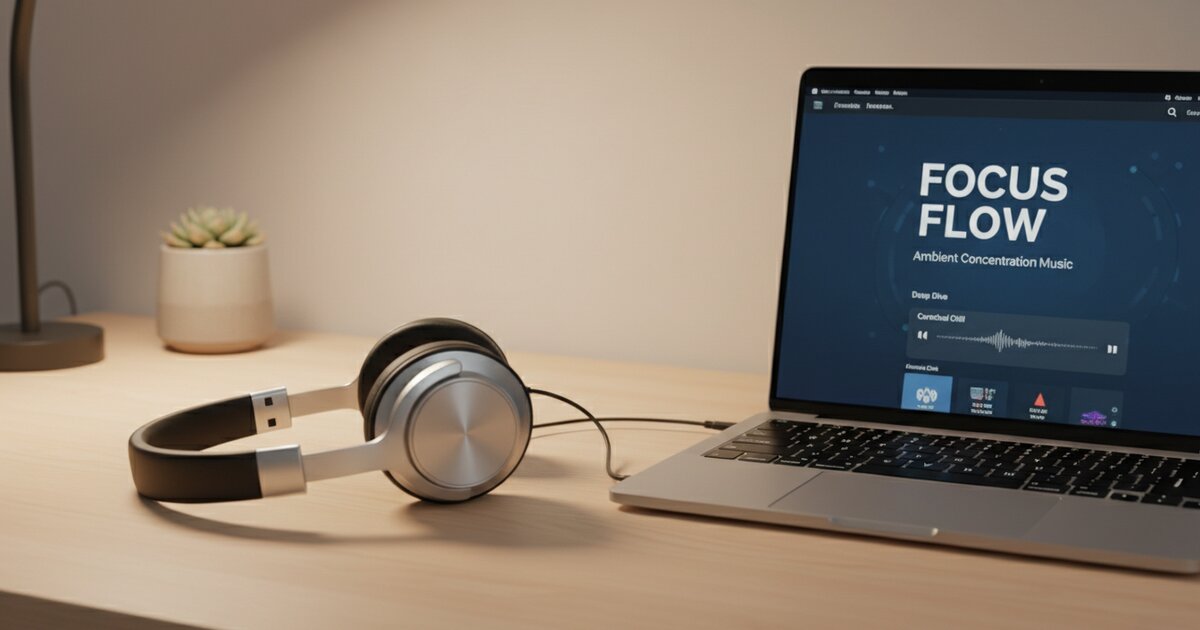
Music and productivity have a complicated relationship. Ask ten people whether they listen to music while working and you will get ten different answers - some swear by their curated playlists, others claim they need absolute silence, and a few will tell you it depends on the day. The truth is that all of them are right, at least partially. The right kind of music can genuinely improve your focus and help you power through difficult tasks. But the wrong kind can shatter your concentration faster than a coworker tapping you on the shoulder.
So how do you figure out which side of the equation you fall on? And if music does help you, what should you actually be listening to? That is what this guide is about. We will walk through what the research says, break down the best genres for focused work, and give you practical advice for building music into your work routine.
The Science Behind Music and Focus
Your brain on music is a busy place. When you listen to music, multiple regions light up - areas responsible for auditory processing, memory, emotion, and even motor control. This widespread activation is part of why music can be such a powerful tool for focus, and also why it can be such a distraction.
Here is what researchers have found about how music affects concentration:
- Music triggers dopamine release. Listening to music you enjoy causes your brain to release dopamine, the same neurotransmitter involved in reward and motivation. This boost in mood can make tedious tasks feel more bearable and help you stay engaged longer.
- Repetitive music occupies the restless part of your brain. Your brain has a tendency to seek out stimulation, especially during boring or repetitive work. Predictable, steady music gives that distraction-seeking part of your mind something to latch onto without pulling your conscious attention away from the task at hand.
- The "Mozart Effect" is overblown, but not entirely wrong. You may have heard that listening to Mozart makes you smarter. The original 1993 study showed a small, temporary improvement in spatial reasoning after listening to a Mozart sonata. The media ran with it far beyond what the data supported. However, subsequent research has confirmed that music can improve performance on certain cognitive tasks - just not in the dramatic, universal way the headlines suggested.
- Music helps most with repetitive or moderately challenging work. Data entry, email processing, routine coding, file organization - these are the kinds of tasks where background music tends to shine. The work is engaging enough to require some attention but not so demanding that any additional input becomes a burden.
- For highly complex work, less is more. When you are tackling something genuinely novel and difficult - learning a new concept, writing something from scratch, solving a problem you have never seen before - your brain needs all of its processing power. In these situations, silence or very minimal ambient sound tends to outperform music.
The takeaway is not that music is universally good or bad for focus. It depends on the person, the task, and the music itself. Understanding these factors puts you in a much better position to make music work for you instead of against you.
Best Types of Music for Focus
Not all music is created equal when it comes to concentration. Some genres are almost purpose-built for focused work, while others will pull your attention away no matter how hard you try. Here are the types that consistently work well.
Lo-fi Hip Hop and Chill Beats
There is a reason those "lo-fi beats to study to" livestreams have millions of viewers. Lo-fi hip hop has become the default soundtrack for knowledge workers, students, and anyone who needs to buckle down and get things done. The genre is characterized by a steady, mid-tempo beat, warm analog textures, and an absence of vocals. Songs blend into each other without jarring transitions.
Why it works so well comes down to predictability. Your brain quickly learns the pattern and stops paying active attention to the music. It fades into the background while still providing enough stimulation to keep you from getting restless. The tempo - usually around 70 to 90 beats per minute - is close to a resting heart rate, which has a naturally calming effect. If you have never tried working to lo-fi beats, it is worth giving it a solid week before making a judgment.
Classical Music
Classical music, particularly from the Baroque period, has a long track record as study and work music. Composers like Bach, Vivaldi, and Handel wrote pieces with steady tempos, clear structure, and a kind of mathematical precision that your brain finds satisfying without finding distracting. Bach's Goldberg Variations, originally composed to help an insomniac count sleep, work remarkably well as background focus music centuries later.
Classical works especially well for reading and writing tasks. The absence of lyrics means it does not compete with your language processing, and the structural complexity gives your brain just enough to chew on in the background. If full orchestral pieces feel too dynamic, try solo piano or solo cello recordings - they tend to be more consistent in volume and intensity.
Ambient and Electronic
Brian Eno essentially invented ambient music in the 1970s with the explicit goal of creating sound that could be "as ignorable as it is interesting." That description is exactly what makes ambient music ideal for focused work. Artists like Eno, Tycho, Boards of Canada, and Stars of the Lid create lush, slowly evolving soundscapes that wrap around you like a sonic cocoon.
The beauty of ambient music is that it fills the silence without demanding anything from you. It masks distracting environmental noise - the hum of an air conditioner, distant conversations, traffic outside your window - while remaining so unobtrusive that you forget it is playing. For people who find silence uncomfortable but regular music too distracting, ambient is often the perfect middle ground.
Nature Sounds
Rain falling on a tin roof. Waves lapping against a shore. A forest alive with birdsong and rustling leaves. Nature sounds are not technically music, but they deserve a spot on this list because they are remarkably effective for focus. A 2015 study published in the Journal of the Acoustical Society of America found that natural sounds improved concentration and cognitive performance compared to both silence and artificial noise.
Nature sounds work primarily through masking. They cover up the irregular, unpredictable noises that grab your attention - a door slamming, someone laughing, a siren in the distance - and replace them with a consistent, organic backdrop. Rain sounds are the most popular choice, but experiment with different environments. Some people focus best with a thunderstorm rolling in the background, while others prefer the steady white noise of a waterfall.
Video Game Soundtracks
This one might sound odd if you are not a gamer, but video game music is specifically composed to keep players focused and engaged for hours at a time without becoming distracting. That is literally the job of a game composer - create music that enhances concentration rather than pulling attention away from the gameplay.
Soundtracks from games like Minecraft, The Legend of Zelda, Skyrim, Stardew Valley, and the SimCity series make excellent work music. They are instrumental, they loop well, and they are designed to sit in the background of an activity that requires sustained attention. The Minecraft soundtrack by C418 is particularly popular as focus music, with its gentle piano melodies and ambient textures creating a calm, contemplative atmosphere.
White, Brown, and Pink Noise
If you want to strip things down to the absolute basics, pure noise generators are hard to beat. White noise contains all frequencies at equal intensity and sounds like television static. Pink noise emphasizes lower frequencies and sounds more balanced to human ears - think steady rainfall. Brown noise goes even further into the low end and has a deep, rumbling quality like a strong wind or a distant waterfall.
Brown noise has exploded in popularity over the past few years, with many people reporting that it helps them focus in a way that music cannot. The theory is that its deep, consistent tone is particularly effective at masking the mid-range frequencies of human speech, making it ideal for open offices or shared workspaces. If you work in an environment where people are constantly talking around you, brown noise might become your best friend.
Music to Avoid When You Need to Focus
Knowing what to listen to is only half the equation. Knowing what to avoid is just as important. Here are the types of audio that tend to hurt concentration more than they help:
- Songs with lyrics, especially in your native language. Your brain cannot help but process words when it hears them. Listening to lyrics while trying to read, write, or think through a problem forces your language processing center to do two things at once. The result is that both suffer. Lyrics in a language you do not understand are less disruptive, but instrumental music is still the safer choice.
- Music with unpredictable changes. Songs that shift suddenly in tempo, volume, or mood will jolt your attention away from your work every time a change happens. Progressive rock, experimental jazz, and certain types of electronic music are common culprits. Consistency is key for focus music.
- Your absolute favorite songs. That track you have been obsessed with all week? Save it for your break. Music you love is engaging by definition - you want to sing along, air drum, or at least tap your foot. That engagement comes at the cost of your attention on work.
- Podcasts and audiobooks. This should be obvious, but it bears mentioning. Podcasts and audiobooks require active listening and compete directly with whatever cognitive work you are trying to do. They are great for commutes, workouts, and household chores, but terrible companions for focused work.
- New music you have not heard before. When your brain encounters something novel, it wants to explore it. A new album or playlist triggers curiosity and active listening - exactly the opposite of what you want during a focus session. Save new music discovery for downtime and stick with familiar material during work hours.
How to Use Music with the Pomodoro Technique
Music and the Pomodoro Technique are a natural pairing. The structure of timed work sessions and breaks gives you a built-in framework for when to play focus music and when to switch to something else. Here is how to combine them effectively.
During your 25-minute work pomodoro, play your chosen focus music at a low, steady volume. The music should be background, not foreground - if you notice yourself actively listening, it is either too loud or the wrong genre. Keep the volume just high enough to mask environmental distractions without becoming a distraction itself.
When the timer goes off and you start your 5-minute break, switch things up. Listen to a favorite song, enjoy some silence, or step away from your desk entirely. The contrast between your focus music and your break creates a clear boundary between work mode and rest mode, which helps your brain transition more cleanly between the two states.
One powerful trick is to use the same playlist or album every time you start a focus session. Over time, your brain builds an association between that specific music and the state of deep concentration. Pressing play becomes a trigger that tells your brain it is time to lock in. This kind of conditioning is surprisingly effective - many people report that their focus music starts working faster and more reliably after just a few weeks of consistent use.
Try pairing your focus playlist with Productivity Timer for a complete system. Start the timer, press play on your music, and let both tools work together to keep you in the zone.
Finding Your Focus Music
Everyone's brain is different, and what works perfectly for your coworker might do nothing for you. Finding your ideal focus music takes some experimentation, but these tips will speed up the process.
- Give each genre at least a week. One session is not enough to judge. Your brain needs time to adjust to a new type of background sound. Try lo-fi for a full week, then classical for a week, then ambient, and compare your experiences after giving each a fair shot.
- Match the music to the work. You do not have to listen to the same thing all day. Use energetic instrumental music for routine tasks, switch to ambient or nature sounds for deep thinking, and try silence for your most challenging work. Different tasks have different needs.
- Build dedicated playlists in advance. Do not waste your pomodoro time scrolling through Spotify trying to find the right vibe. Create a few go-to playlists for different types of work so you can press play and get started immediately. A "coding" playlist, a "writing" playlist, and a "general focus" playlist cover most situations.
- Consider your environment. Working in a noisy open office calls for a different approach than working in a quiet home office. In loud environments, you may need noise-cancelling headphones paired with brown noise or ambient music. In quiet spaces, gentle lo-fi or classical might be all you need - or you might find that silence works perfectly fine.
- Accept that music might not be for you. Some people genuinely concentrate better in silence, and that is perfectly valid. If you have tried multiple genres across different tasks and consistently feel more distracted with music on, trust that signal. You might also find that a single repeating sound - like a fan or a white noise machine - gives you the background consistency you need without the complexity of music.
Quick Start Recommendations
If you want to skip the experimentation phase and just try something that works for most people, here are specific recommendations based on common work types:
- For coding and technical work: Lo-fi hip hop beats or brown noise. The steady rhythm of lo-fi pairs well with the pattern-matching nature of programming, and brown noise is excellent for blocking out office chatter during debugging sessions.
- For writing and content creation: Classical music (solo piano or Baroque) or ambient electronic. These genres provide enough texture to prevent restlessness without competing with your internal monologue as you compose sentences.
- For data entry and repetitive tasks: Your favorite instrumental music or upbeat lo-fi. Since the work does not demand heavy cognitive processing, you can afford slightly more engaging music that keeps your energy up and prevents boredom.
- For creative brainstorming: Nature sounds or moderate silence. When you need your mind to wander productively and make unexpected connections, less structured audio tends to give your brain the space it needs.
The relationship between music and focus is personal, and what you discover through your own experimentation matters more than any general recommendation. Start with one of the suggestions above, pair it with a timed focus session, and pay attention to how it feels. Your ideal focus soundtrack is out there - you just need to find it.
Frequently Asked Questions
Is it better to work in silence or with music?
It depends on the task and the person. For repetitive or moderately challenging work, background music can boost mood and help you stay engaged. For highly complex tasks that require heavy thinking, silence or very minimal ambient sound tends to work better. Experiment with both across different types of work to find what suits you.
Why does lo-fi music help with focus?
Lo-fi music has a steady, repetitive beat and no vocals, which means your brain quickly stops paying active attention to it. It provides just enough background stimulation to keep you from getting restless without pulling your focus away from work. The tempo, usually around 70 to 90 BPM, is close to a resting heart rate, which has a naturally calming effect.
Can lyrics in music hurt concentration?
Yes, especially if the lyrics are in a language you understand. Your brain automatically tries to process words when it hears them, which competes directly with reading, writing, or any task that involves language. Instrumental music or music with lyrics in a language you do not speak is a safer choice for focused work.
What volume should focus music be at?
Keep it low enough that you could comfortably have a conversation over it. Focus music should sit in the background, not the foreground. If you notice yourself actively listening to the music instead of working, it is probably too loud. The goal is to mask environmental distractions without creating a new one.