Energy Management vs. Time Management: What Matters More
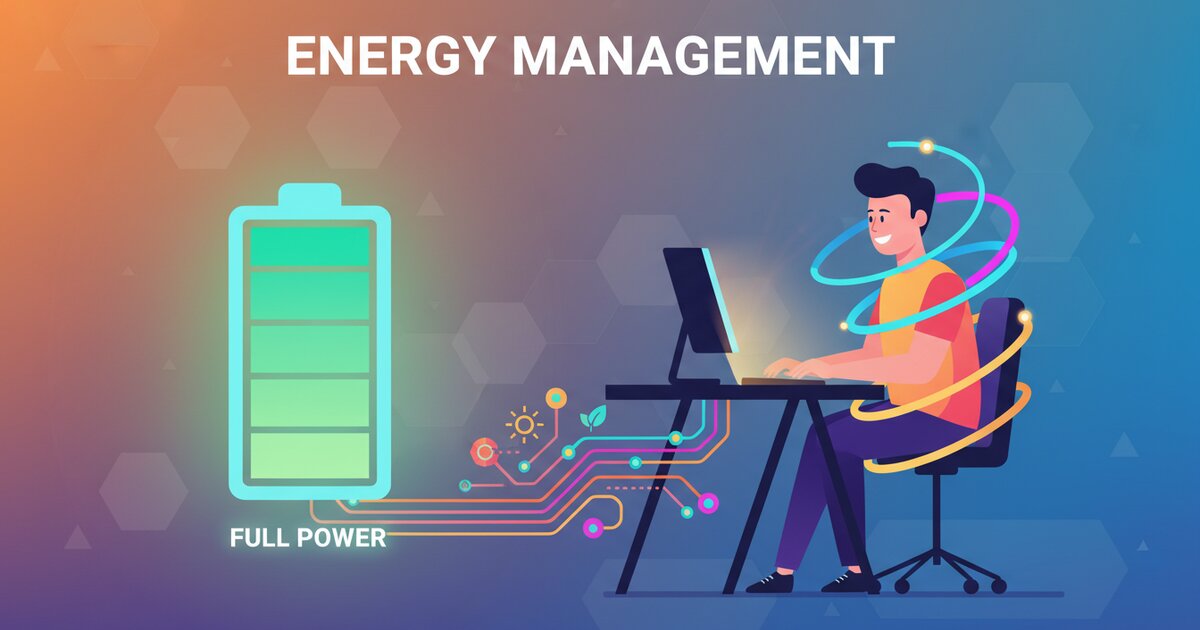
Everyone gets the same 24 hours in a day. You have heard that a thousand times. But if time were the only factor, then every person who meticulously schedules their calendar would be wildly productive - and we all know that is not the case. You can plan every minute of your day, color-code your calendar, and still collapse on the couch at 5pm feeling like you got nothing meaningful done.
The missing piece is energy. Two hours of focused work when your brain is sharp and your body feels good will produce more than six hours of sluggish effort when you are running on fumes. The most productive people are not the ones who manage their time the best. They are the ones who understand their energy - when it peaks, when it dips, and how to work with those natural rhythms instead of fighting against them.
The Problem with Time Management Alone
Time management is useful. Nobody is arguing against having a calendar or a to-do list. But time management by itself has a fundamental blind spot: it treats every hour as equal. It assumes that scheduling a complex strategy session at 3pm on a Friday is just as effective as scheduling it at 9am on a Tuesday. And anyone who has tried to think clearly after a long week of meetings knows that is not true.
When you focus only on managing time, you end up filling slots on your calendar without asking a more important question: do I actually have the capacity to do this well right now? You schedule back-to-back meetings all morning, then wonder why you cannot concentrate on the report you blocked off time for in the afternoon. The time was there. The energy was not.
Here is what pure time management misses:
- Not all hours are created equal. Your cognitive ability fluctuates throughout the day. An hour at 10am might be worth three hours at 4pm for tasks that require deep thinking.
- Being busy is not the same as being productive. You can fill every minute of your day and still accomplish very little of real value. Time management measures busyness. Energy management measures output quality.
- Willpower is a limited resource. Each decision you make, each distraction you resist, each difficult conversation you have - they all draw from the same well. By mid-afternoon, that well is often dry, no matter how neatly your calendar is organized.
- Recovery is not optional. Time management often treats breaks as wasted time. But without recovery, your ability to perform keeps declining. You end up spending more time on tasks that should take half as long.
Time management tells you where to put tasks. Energy management tells you which tasks you can actually do well at any given moment. You need both.
What Is Energy Management?
Energy management is the practice of consciously tracking and directing your physical, mental, emotional, and spiritual energy to get the most out of your day. It was popularized by Jim Loehr and Tony Schwartz in their book "The Power of Full Engagement," and the core idea is simple: performance is grounded in how well you manage energy, not time.
There are four dimensions of energy, and each one affects your ability to work:
- Physical energy - your foundation. This comes from sleep, nutrition, exercise, and rest. When your body is tired, hungry, or sedentary, everything else suffers. You cannot think clearly or regulate your emotions when you are physically depleted.
- Mental energy - your ability to focus, think critically, and solve problems. This is the energy that gets drained by difficult cognitive tasks, multitasking, and constant context switching. It is also the type of energy most people notice running low by mid-afternoon.
- Emotional energy - your mood, patience, and resilience. Stress, conflict, frustration, and anxiety all drain emotional energy. When it runs low, small annoyances feel overwhelming, and your interactions with colleagues and family become strained.
- Spiritual energy - not necessarily religious, but about purpose and meaning. This is the energy you get from doing work that aligns with your values and goals. When your work feels meaningless, even simple tasks become exhausting. When it feels purposeful, you can sustain effort far longer than expected.
Most people only think about energy in physical terms - am I tired or awake? But all four dimensions work together. You might be physically rested but emotionally drained from a difficult morning at home. You might feel motivated and purposeful but mentally fried from four hours of spreadsheet analysis. Understanding all four types helps you pinpoint exactly why you are struggling and what to do about it.
How to Identify Your Peak Energy Hours
Everyone has times during the day when they are naturally sharper, more creative, and more focused. And everyone has times when their brain feels like it is wading through mud. The first step in energy management is figuring out your personal pattern.
Most people fall into one of three categories: morning types who peak early, evening types who come alive later in the day, and a middle group that does their best work late morning to early afternoon. Your chronotype - your biological tendency toward being a morning person or night owl - is largely genetic. Fighting it is possible but exhausting. Working with it is much smarter.
Beyond your general chronotype, your energy follows what researchers call ultradian rhythms - roughly 90-minute cycles of higher and lower alertness throughout the day. During a peak phase, you can focus with relative ease. During a trough, concentration takes much more effort. These cycles are why you might feel razor-sharp at 10am, slightly foggy by 11:30, and then alert again by 1pm.
Here is how to find your own pattern:
- Track your energy for one week. Set an alarm to go off every 90 minutes during your waking hours. When it goes off, rate your energy on a scale of 1 to 10 and jot down what you were doing. A notes app or a simple spreadsheet works fine.
- Look for patterns after the week is up. When did you consistently rate yourself highest? When were you consistently lowest? Most people find two or three peak windows and one or two clear low points.
- Pay attention to the type of energy, not just the level. You might notice that mornings are best for analytical thinking while late afternoons are better for creative brainstorming. Different tasks draw on different kinds of mental energy.
- Note what drains you and what restores you. Certain meetings, tasks, or environments might consistently tank your energy. Others might give you a boost. This information is just as valuable as knowing your peak hours.
Aligning Tasks with Energy Levels
Once you know your energy pattern, the next step is matching your tasks to it. This is where energy management starts producing real, noticeable results.
The principle is straightforward: do your hardest, most important work during your peak energy hours, and save routine, low-effort tasks for your low-energy periods. Most people do the opposite. They arrive at work, check email for 45 minutes, attend a couple of meetings, and by the time they sit down to do their real work, their best energy is already gone.
Here is a practical way to think about task alignment:
- Peak energy hours - deep work, complex problem-solving, strategic thinking, creative work, writing, learning new skills. These are your golden hours. Guard them fiercely.
- Moderate energy hours - collaborative work, meetings that require your input, planning sessions, lighter analytical work. You are functional but not at your sharpest.
- Low energy hours - email, administrative tasks, filing, scheduling, data entry, routine follow-ups, organizing your workspace. These tasks need to get done, but they do not need your best brain.
The single most important change you can make is protecting your peak hours from interruptions. Do not schedule meetings during your best focus window. Do not check email during your sharpest 90 minutes. Those hours are for work that moves the needle on your most important goals, and nothing else.
Energy Management Strategies That Work
Knowing your energy pattern is only useful if you actively manage it. Here are the strategies that make the biggest difference.
Prioritize Sleep Above Everything
Sleep is the single biggest factor in your daily energy levels, and it is the one most people sacrifice first. Cutting sleep from seven hours to six might give you an extra hour of time, but it costs you far more in reduced focus, slower thinking, worse decision-making, and lower emotional resilience. The math does not work in your favor. Seven to nine hours is the range most adults need, and very few people can genuinely function well on less.
Eat for Sustained Energy
Large, heavy meals cause blood sugar spikes followed by crashes. Skipping meals leads to low blood sugar and poor concentration. The sweet spot is regular, moderate meals and snacks that combine protein, healthy fats, and complex carbohydrates. Think chicken with vegetables and rice, not a giant bowl of pasta followed by a sugar-loaded coffee drink.
Move Your Body Daily
Even 20 to 30 minutes of moderate exercise - a brisk walk, a bike ride, a simple bodyweight workout - increases your baseline energy, improves your sleep quality, and boosts your mood. Exercise is not just something that burns calories. It is one of the most effective tools for increasing your mental energy and emotional resilience.
Take Real Breaks
Working for hours straight without stopping does not make you more productive. It makes you slower, less accurate, and more prone to mistakes. Your brain needs periodic recovery to maintain performance. Taking breaks at work is not laziness - it is how you sustain high output across an entire day.
The Pomodoro Technique works so well partly because it forces regular breaks. Working in 25-minute focused sprints with 5-minute breaks aligns naturally with your brain's need for recovery. After four cycles, take a longer break of 15 to 30 minutes. This rhythm keeps your energy steadier throughout the day than grinding for three hours straight and then crashing.
Manage Your Stress
Chronic stress is one of the biggest energy drains there is. It keeps your body in a heightened state that burns through physical and emotional resources even when you are sitting still. You cannot eliminate all stress, but you can manage it through regular exercise, adequate sleep, clear boundaries between work and personal time, and brief mindfulness or breathing exercises during the day. Even two minutes of slow, deliberate breathing between tasks can help reset your nervous system.
Combining Energy Management with Time Management
Energy management and time management are not competing approaches. They are two halves of the same system. Time management gives you structure - it tells you where things go on your calendar. Energy management gives you intelligence - it tells you what should go where.
Here is how to use them together:
- Use time blocking to protect your peak energy hours. Block off your best focus window on your calendar every single day. Label it something that discourages interruptions. This is when your most important deep work happens.
- Schedule meetings and collaborative work during moderate energy hours. These tasks still require presence and engagement, but they do not demand the same level of solo concentration as deep work.
- Batch administrative tasks into your low energy periods. Email, Slack catch-up, expense reports, scheduling - group them together and knock them out when your brain is not capable of much else anyway.
- Build recovery into your schedule. Block short breaks between meetings. Schedule a proper lunch away from your desk. Plan a brief walk in the afternoon. If recovery is not on your calendar, it will not happen, and your energy will decline steadily throughout the day.
- Review and adjust weekly. At the end of each week, look at how your energy held up. Did you protect your peak hours? Did you crash at a predictable time? A weekly productivity review helps you track these patterns over time so you can tweak next week's schedule.
The combination is powerful. Time blocking without energy awareness means you might schedule your hardest work during your lowest point. Energy awareness without time blocking means you know when you are at your best but have no system to protect those hours. Together, they create a schedule that respects both the clock and your biology.
A Simple Energy Audit
If you want to start managing your energy today, here is a straightforward process you can follow this week. It takes minimal effort but gives you information that can change how you work.
- Create a simple tracking sheet. A spreadsheet or a notebook page with columns for time, energy level (1-10), current task, and any notes. You do not need a fancy app for this.
- Check in every 90 minutes for five workdays. When your alarm goes off, take 30 seconds to note your energy level and what you are doing. Do not overthink the rating - just go with your gut.
- At the end of the week, review your data. Look for your consistent peaks and valleys. Note which activities drain you most and which ones energize you. Identify your two or three best focus hours each day.
- Make one change the following week. Move your most important task to your peak energy window. Or move a draining activity away from your peak window. Just one change - see how it feels.
- Adjust and repeat. After a second week, make another change based on what you have learned. Over the course of a month, you will have a completely different relationship with your workday - one where you are working with your energy instead of against it.
Most people are surprised by what they find. You might discover that the mid-morning slump you blamed on coffee withdrawal is actually caused by a draining weekly meeting. Or that you are wasting your sharpest hour every day on email because that is just what you have always done first. The data shows you what habits to change, and the changes often feel obvious once you see the pattern.
Start Working with Your Energy, Not Against It
You cannot add more hours to the day. But you can get dramatically more out of the hours you already have by paying attention to your energy. The difference between a productive day and a frustrating one usually is not how much time you had - it is whether you used your best energy on your most important work.
This week, try one thing: track your energy for a few days and move your most important task to your peak window. You do not need to overhaul your entire schedule. Just that one shift - doing your hardest work when your brain is at its best - can make a noticeable difference in what you accomplish and how you feel at the end of the day.
Ready to make the most of your peak energy hours? Start a focused work session with Productivity Timer and see what you can accomplish when your energy and your effort are aligned.
Frequently Asked Questions
What is energy management?
Energy management is the practice of tracking and directing your physical, mental, emotional, and spiritual energy to get more out of your day. Rather than treating every hour as equal, you match your most demanding tasks to the times when you naturally feel sharpest and save routine work for lower-energy periods.
How do you know your peak energy hours?
Track your energy level on a 1-to-10 scale every 90 minutes for about a week. Note the time and what you were doing at each check-in. After a few days, clear patterns will emerge showing when you consistently feel most alert and when you tend to hit a slump.
Is energy management better than time management?
They work best together. Time management gives you structure by putting tasks on your calendar. Energy management tells you which tasks belong where based on how much focus they require and when your brain is best equipped to handle them. Using both means you work on the right things at the right times.
How does sleep affect energy management?
Sleep is the single biggest factor in your daily energy. Cutting even one hour of sleep reduces your focus, slows your thinking, and weakens your ability to handle stress. Seven to nine hours is what most adults need, and consistently hitting that range makes every other energy management strategy more effective.